
How Social Proof Can Help You Convert Visitors Into Buyers

On this page
You’ve built a solid website. Your product solves real problems. But visitors keep leaving without buying. Here’s what might be missing: proof that other people trust you.
When shoppers can’t touch a product or talk to a salesperson, they look for signals that they’re making a smart decision. They want to know someone else has already taken the risk and been happy with the result.
That’s where social proof comes in. It shows potential buyers that real people have already chosen your product and benefited from it.
The numbers back this up. Products with customer reviews are 270% more likely to be purchased than products without any reviews. That’s a massive difference, and it happens because reviews answer the doubts running through a visitor’s mind before they commit.
This article breaks down how to use different types of social proof to turn skeptical visitors into confident buyers.
Place Strategic Customer Testimonials
Customer testimonials remain one of the most effective forms of social proof because they bring real voices into the buying process.
Prospects don’t want to hear only from a brand. They want to hear from people who’ve already taken the leap. When visitors see authentic feedback, it builds trust quickly and reduces the natural skepticism that comes with making a purchase decision.
To use testimonials effectively:
- Avoid vague statements like “Great service!” or “Highly recommend.” These don’t add much credibility.
- Instead, collect detailed stories that highlight a customer’s challenge, the solution you provided, and the outcome they achieved.
- Specifics create relatability and give potential buyers a chance to see themselves in the same position.
- Adding names, photos, or company details (when appropriate) makes testimonials feel more genuine and credible.
- Placement also matters. Testimonials tucked away on a separate page may never get seen.
- Put them where they can influence decisions: product pages, landing pages, and checkout flows. This way, they’re present at the moment when a visitor is deciding whether to commit.
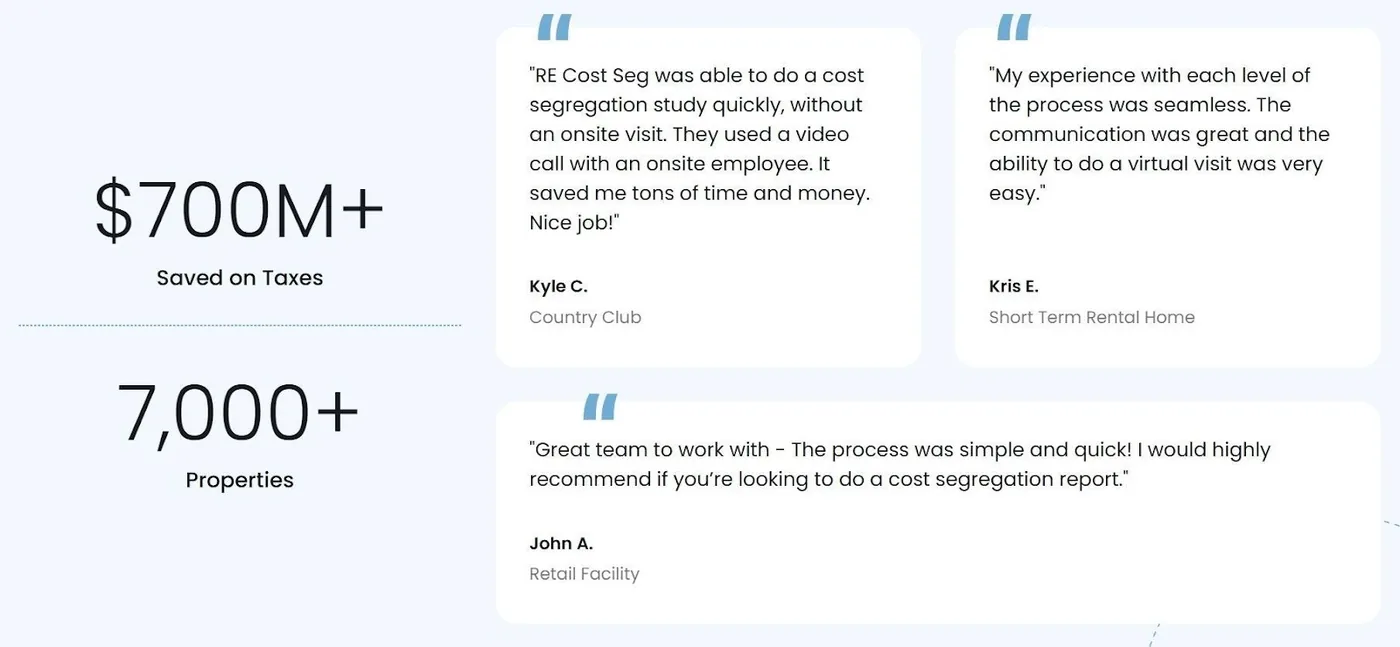
A strong real-world example of this approach comes from RE Cost Seg, a company that provides cost segregation services for real estate owners.
On their homepage, they feature a dedicated section showcasing testimonials from clients. Each story goes beyond a quick thank-you, explaining how RE Cost Seg’s expertise directly impacted their financial outcomes.
These testimonials highlight tangible results and build confidence for potential clients considering the service.
Source: recostseg.com
By giving space to real voices and experiences, RE Cost Seg makes it easier for new visitors to trust them and see the potential benefits of working together.
This simple but powerful strategy shows that the right testimonials, shared in the right place, can do much of the selling for you.
Leverage Video Testimonials for Stronger Impact
Video testimonials take customer stories to another level by combining words, tone, and body language in a way text can’t match.
Seeing a real person speak about their experience builds instant credibility and creates a sense of authenticity that’s hard to fake. Viewers can pick up on enthusiasm, confidence, and sincerity – all of which help break down doubt and reinforce trust in your product or service.
To use video testimonials effectively:
- Keep them short and focused. A one- to two-minute clip is usually enough to hold attention while still delivering valuable detail.
- Encourage customers to speak naturally about the specific problem they faced, how your business solved it, and the results they achieved.
- Avoid scripts that sound rehearsed. Authenticity is far more persuasive than perfection.
- For maximum impact, host the videos on your site rather than linking out to external platforms, and place them near key decision points like landing pages or product detail pages.
- Adding captions ensures accessibility and allows people to engage even without sound.
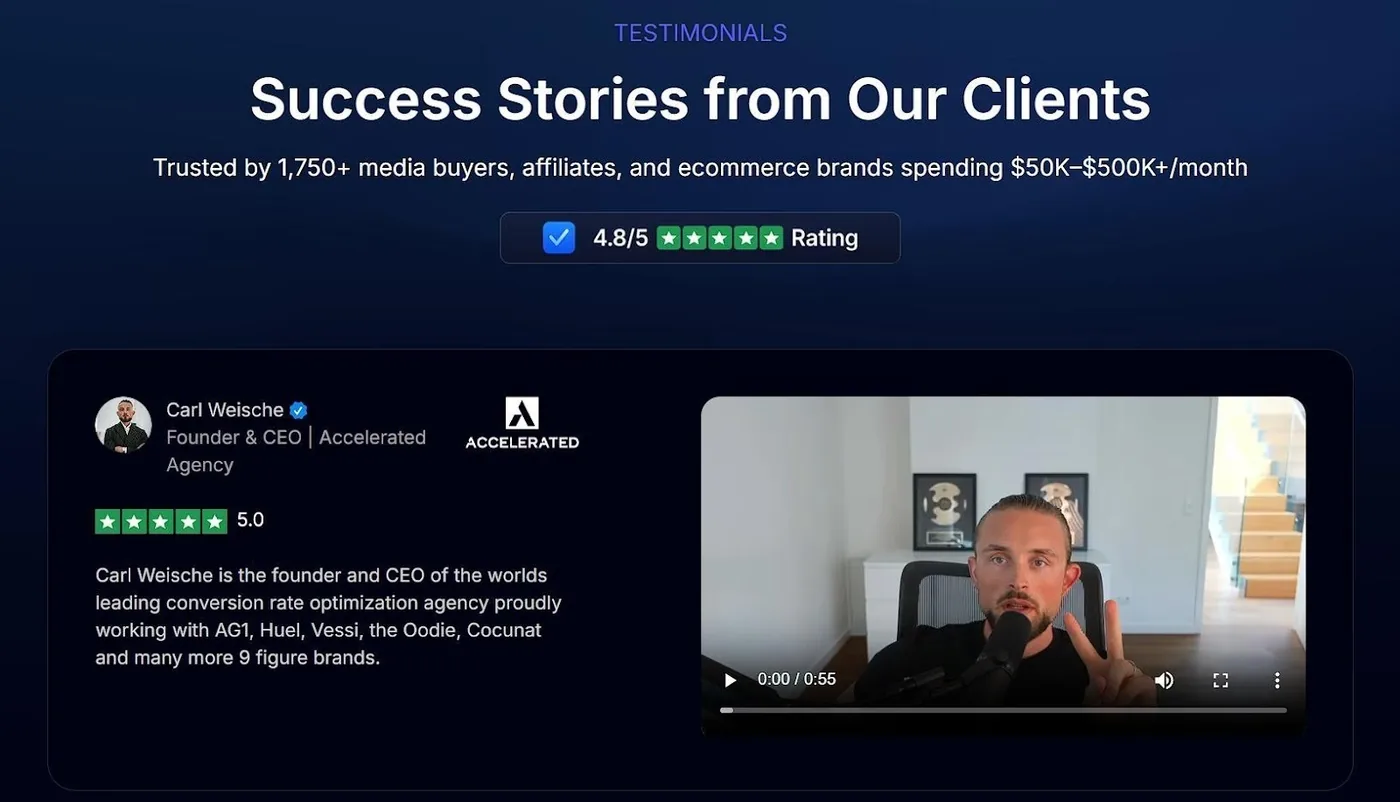
A practical example is Uproas, a company that provides premium agency ad accounts for platforms like Meta, Google, and TikTok.
On their website, they feature a video testimonial from a client who speaks directly about the results achieved through Uproas’s expertise. Even though the video is short, it conveys much more nuance and detail than a text-only testimonial could.
The client’s tone and delivery reinforce the message of trust and competence, making it clear why partnering with Uproas was valuable.
Source: uproas.io
Weaving video into your social proof strategy gives potential buyers a more dynamic and convincing way to connect with your brand. That connection can tip the scale toward conversion.
Showcase Content Your Customers Create
User-generated content (UGC) gives potential buyers a clear view of your product in real-world use. Instead of polished brand messaging, they see how actual customers interact with what you sell.
That authenticity carries weight. 85% of consumers say they prefer visual UGC over branded content when deciding what to buy. People trust other people more than they trust a brand’s marketing, which makes UGC one of the strongest ways to earn credibility and influence purchasing behavior.
To make the most of UGC:
- Focus on collecting content that feels natural and relatable.
- Encourage customers to share photos or videos of your product in action, and create hashtags or campaigns that make participation easy.
- Always ask for permission before republishing their content, and credit creators to maintain goodwill.
- For placement, highlight UGC prominently on your homepage, product pages, and even in email campaigns. The closer this content is to the purchase decision, the more likely it is to reduce hesitation.
- Adding a mix of different voices (such as long-term customers, first-time buyers, or influencers) broadens your appeal and showcases your product from multiple angles.
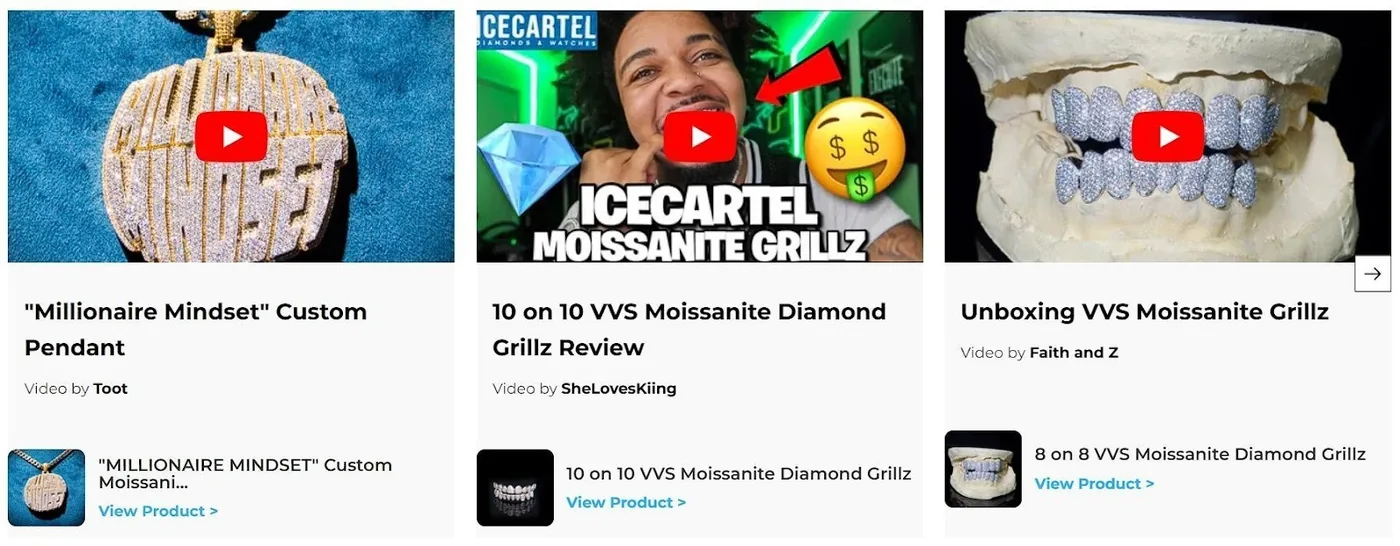
IceCartel, a men’s jewelry brand, executes this perfectly. On their homepage, they feature videos of social media personalities unboxing and reviewing their pieces, primarily on YouTube.
These clips act as both testimonials and product showcases, letting visitors see the jewelry up close while hearing honest reactions. The combination of excitement, style, and authenticity gives potential buyers a sense of what they can expect if they order.
Source: icecartel.com
Incorporating this kind of social proof allows Ice Cartel to turn their customers and community into advocates. That makes their marketing feel more trustworthy and engaging than anything a brand could say alone.
Feature Press Coverage and Media Recognition
When a respected publication or media outlet highlights your brand, it carries weight that no ad campaign can match. This is because earned media (coverage you don’t pay for) signals that your business has been recognized as credible by independent sources.
Research shows that 92% of consumers worldwide trust earned media more than other forms of advertising, which makes it one of the most valuable types of social proof you can leverage.
To use media mentions effectively:
- Focus on visibility and placement. Don’t bury these mentions in a press page that few visitors will find.
- Instead, place them where they’ll have the strongest impact, such as on your homepage, near CTAs, or within product pages. The goal is to make sure visitors immediately associate your brand with authority and legitimacy.
- Using logos of well-known outlets works especially well because recognition is instant. Pairing logos with direct links or snippets from the feature adds even more credibility.
- To secure these mentions, consider pitching stories, sharing unique insights, or contributing expert commentary within your niche.
- Once you earn coverage, update your site quickly and highlight it across other channels like email and social media.
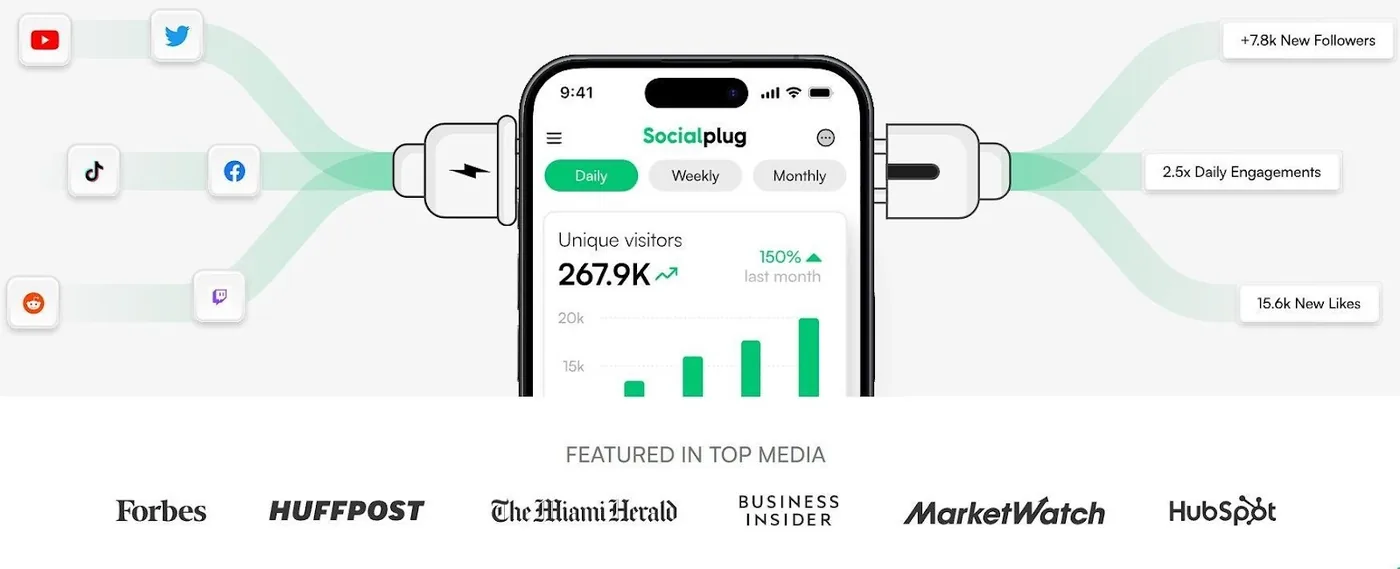
A clear example comes from Socialplug, a marketplace that provides engagement services across all major social platforms, including followers, likes, views, and comments.
Right below their homepage’s header, they prominently display logos from Forbes, HuffPost, and Business Insider – outlets that have either mentioned or featured them. This placement ensures visitors instantly associate Socialplug with trusted, established names in media.
The effect is powerful. Skepticism fades and authority takes center stage.
Source: socialplug.io
Showcasing earned media strategically helps align your brand with credibility that advertising alone can’t deliver.
Build Detailed Case Studies and Success Stories
Case studies and success stories go beyond surface-level testimonials by showing the full journey from challenge to solution. They give prospects a detailed, transparent look at how your product or service delivers measurable outcomes.
It’s no surprise that 62% of marketers consider case studies to be the most effective type of content they use. Stories backed by real results are hard to ignore.
To create strong case studies:
- Structure them around a clear narrative. Start with the customer’s challenge, outline the solution you provided, and finish with tangible results.
- Include data where possible, as numbers make the outcome more concrete.
- Keep the language simple and straightforward so that even complex solutions feel approachable.
- Pairing short excerpts on your homepage with links to full case studies is a smart way to balance brevity and depth. The short format builds curiosity, while the full story gives interested visitors the details they need to feel confident about working with you.
- Make sure your case studies are easy to find. Feature them on your homepage, link to them in your navigation, and repurpose them into social media posts, presentations, or sales materials. Each touchpoint reinforces your credibility and shows that you deliver real-world results.
Deel, which provides companies with global payroll, compliance, and HR solutions, demonstrates this approach well.
On their homepage, they feature customer stories from companies they’ve helped, highlighting the specific challenges faced and the solutions Deel provided. Each story includes a brief excerpt alongside a link to the full case study, where details about problems, strategies, and results are laid out clearly.
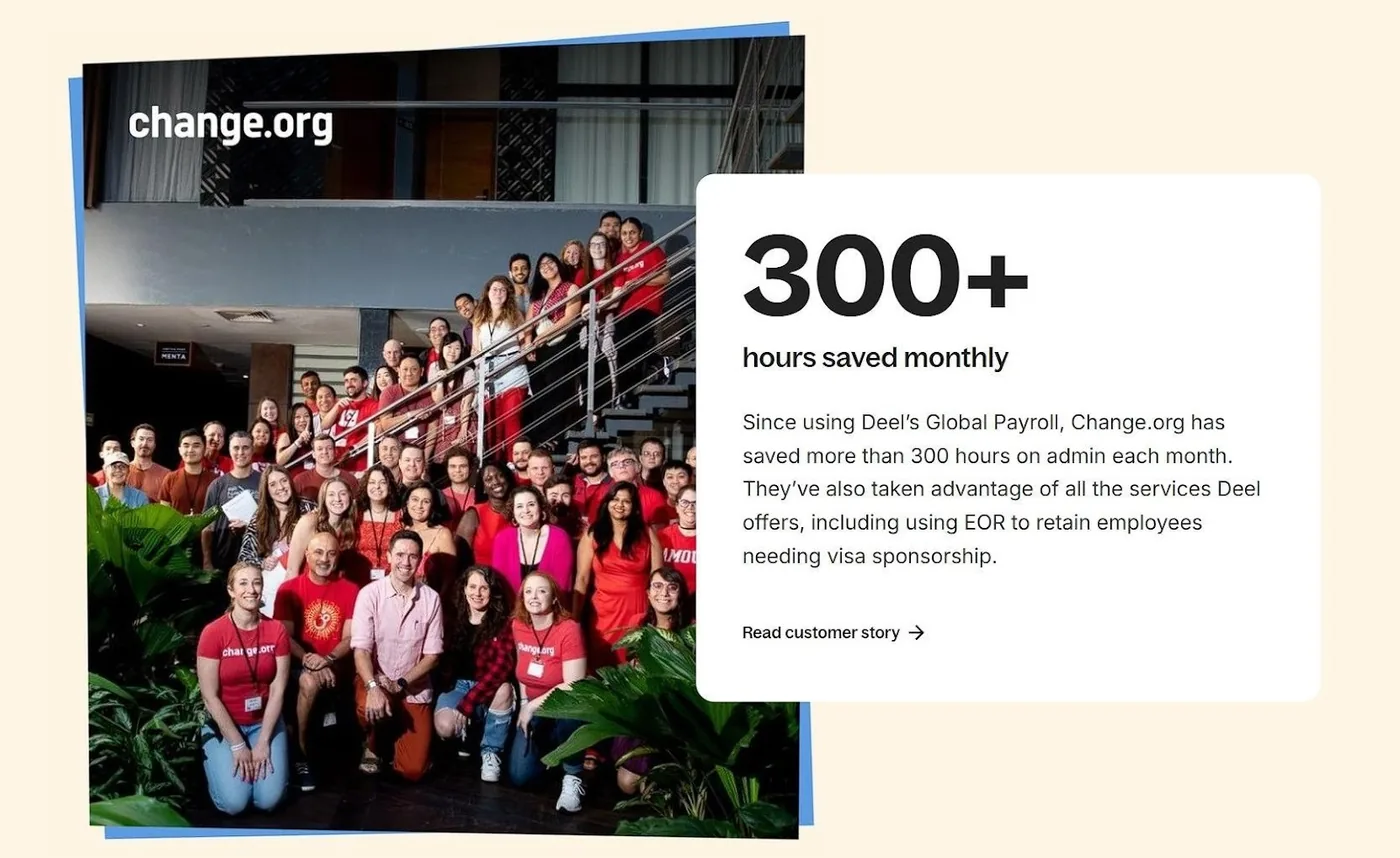
Source: deel.com
This approach makes Deel’s expertise easy to trust, positioning them as a proven partner in solving complex HR challenges worldwide.
Display Your High-Profile Client Logos
One of the fastest ways to establish credibility is by showing the caliber of companies that already trust your product or service. High-profile client logos act as instant validation, signaling to prospects that respected brands have vetted and chosen to work with you.
This kind of association reduces doubt because visitors assume that if well-known companies rely on your solution, it must be reliable and effective.
To use client logos effectively:
- Prioritize placement and presentation. Display them prominently on your homepage (ideally above the fold or near key CTAs) so visitors notice them immediately.
- Keep the logos clean, consistent in size, and easy to recognize.
- Avoid overloading the section with too many names, as this can dilute the impact. Featuring a handful of respected, relevant brands is far more persuasive than a cluttered wall of logos.
- For extra credibility, consider linking the logos to related case studies or testimonials that tell the story behind the partnership.
- Securing permission is also key. Always confirm you’re allowed to use a client’s logo in your marketing, and ensure the brand guidelines are followed. Proper usage not only protects relationships but also keeps your presentation professional.
Here’s an example of this tactic by Instapage, a landing page builder trusted by well-known companies.
On their website, they feature client logos from brands like Hello Fresh, Zendesk, Gartner, and Vimeo – names that visitors immediately recognize. Placing these logos just below the homepage header ensures they’re one of the first elements people see.
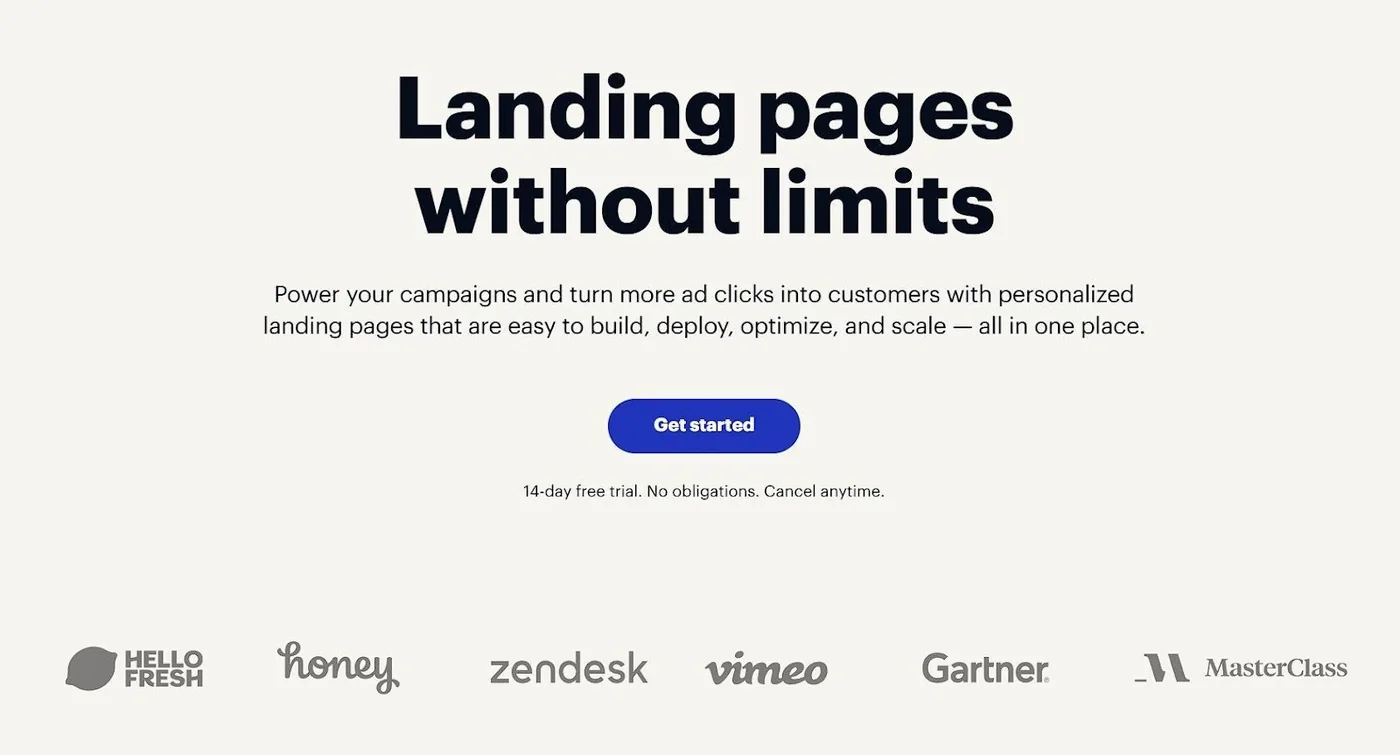
This subtle but powerful display communicates that Instapage is a trusted provider for companies that demand high quality. For new visitors, this association reduces uncertainty and positions Instapage as a proven, credible choice in their niche.
Final Thoughts
Social proof works because it shows potential buyers that others have already placed their trust in you and found value. Whether it’s testimonials, videos, case studies, media mentions, or client logos, each tactic reduces hesitation and builds confidence at the exact moment it’s needed.
The key is to use these elements thoughtfully and place them where they’ll have the most impact.
So, start by implementing at least one of these strategies. Show your potential customers that others have already walked this path successfully. When you provide that proof, you make it easy for them to choose you.
Frequently Asked Questions
How can social proof help you convert visitors into buyers?
Social proof converts visitors into buyers by showing that real people have already chosen your product and benefited from it, which reduces the doubt a shopper feels before committing. Testimonials, video reviews, user-generated content, press mentions, case studies, and client logos each answer hesitation at the moment of decision. Placing them on product pages, landing pages, and checkout flows is what makes them work.
What is social proof in ecommerce?
Social proof is any signal that other people trust and value your product, such as customer testimonials, reviews, user-generated content, media coverage, case studies, and recognizable client logos. It matters online because shoppers cannot touch the product or talk to a salesperson, so they look for evidence that someone else took the risk and was happy. It builds trust quickly and reduces natural skepticism.
Where should you place testimonials and reviews on your site?
Place testimonials and reviews where they can influence a decision, meaning product pages, landing pages, and checkout flows, not tucked away on a separate page few visitors find. Proximity to the purchase decision is what reduces hesitation. The same logic applies to client logos and media mentions, which work best near the header or key calls to action.
Are video testimonials more effective than text reviews?
Video testimonials often carry stronger impact than text because they combine words, tone, and body language, which builds instant credibility and feels harder to fake. Keep them to one or two minutes, let customers speak naturally about the problem and result, and host them on your own site near key decision points. Adding captions keeps them accessible without sound.
What types of social proof can a store use?
A store can use customer testimonials, video testimonials, user-generated content, press and media coverage, detailed case studies, and high-profile client logos. Each one reduces hesitation in a different way, from relatable personal stories to the instant authority of a recognized brand or publication. The key is using them thoughtfully and placing each where it has the most impact.